


Want to get the most out of your guest blogging efforts?
Negotiating the right terms is vital. Without preparation, you risk losing SEO value, visibility, and credibility. This guide breaks down how to secure high-quality backlinks, fair pricing, and lasting editor relationships.
Key Takeaways:
- Research is critical: Target blogs with strong metrics (e.g., DR 30–50, steady traffic) and review submission guidelines carefully.
- Market rates for 2026: Guest posts range from $130 for DR 20–40 sites to $1,200+ for DR 80–100 sites.
- Craft a standout pitch: Personalize your email, highlight your expertise, and propose unique, audience-relevant topics.
- Negotiate smartly: Clarify content ownership, backlink placement, and payment terms upfront.
- Build long-term relationships: Promote your posts, engage with editors, and aim for repeat collaborations.
Quick Pricing Overview:
| DR Range | Price (USD) |
|---|---|
| DR 20–40 | $130–$220 |
| DR 60–80 | $400–$700 |
| DR 80–100 | $700–$1,200+ |
Bottom line: Success in guest blogging is about preparation, clear communication, and focusing on mutual benefits. Follow these steps to secure impactful guest posts that drive SEO and traffic.
Research and Prepare Before Reaching Out
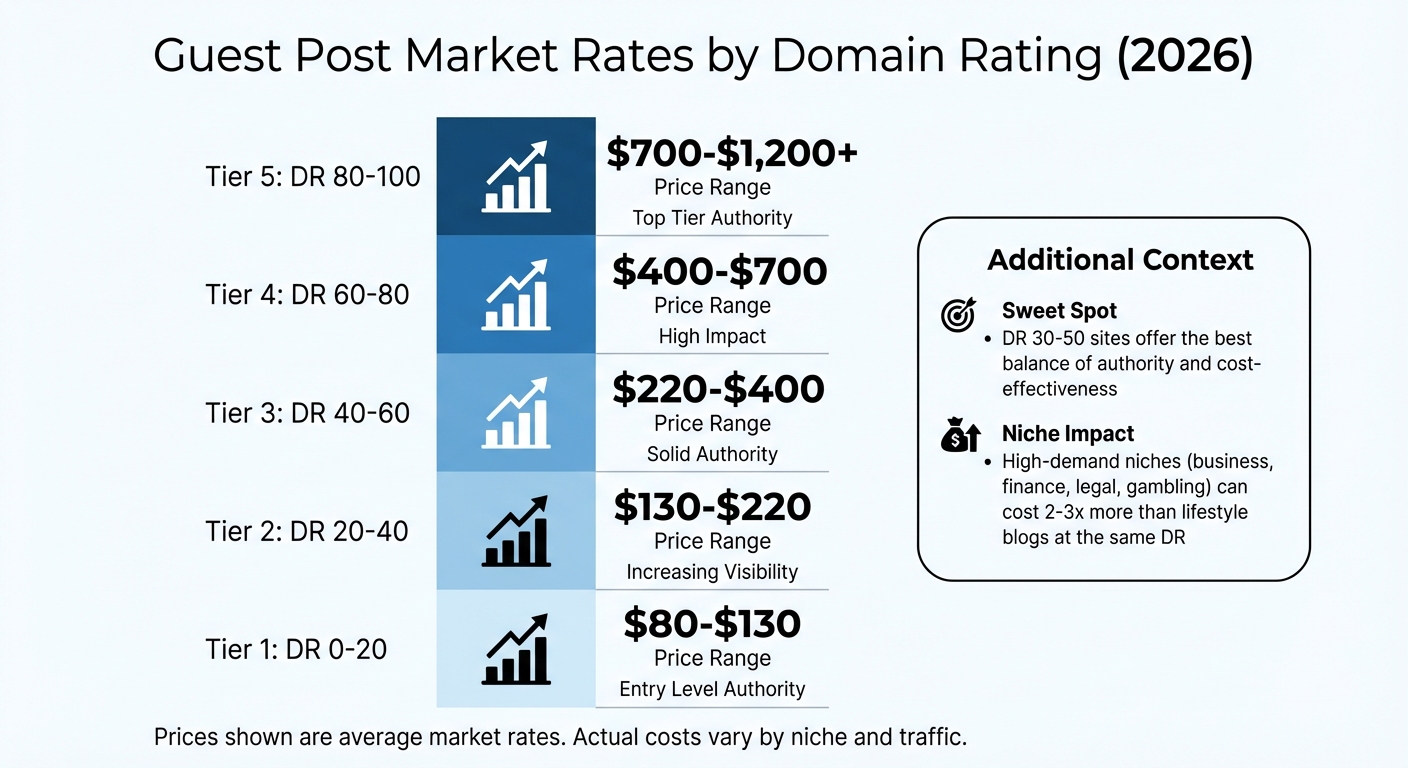
Guest Post Pricing by Domain Rating 2026
Jumping into negotiations without preparation is a sure recipe for overpayments and missed opportunities. The key to successful guest blogging lies in doing your homework.
Before drafting your pitch, pinpoint the blogs you want to target, review their submission guidelines, and understand what fair pricing looks like.
This groundwork ensures you can negotiate terms that strengthen your SEO while protecting your brand’s credibility.
The next step? Identify and focus on blogs offering real value.
Find High-Value Blogs for Outreach
Here’s a staggering fact: 85% of guest post sites found manually have low value (think DR under 40 and fewer than 10,000 monthly visitors). That leaves just 15% of sites worth your time and effort.
Start by analyzing your competitors’ backlinks using tools like Ahrefs, Semrush, or SpyFu. These tools can reveal where your competitors are getting published, giving you a list of blogs likely open to your content too.
Don’t stop there. Advanced Google search operators can uncover hidden gems. For example, use searches like inurl:/contribute + [your niche] or intitle:"guest post" + [keyword] to find submission pages that might not show up in basic searches.
If you want to save time, platforms like Backlinku offer a curated marketplace of manually reviewed websites.
You can filter by niche, DR, traffic, and even language, cutting out the tedious vetting process and letting you focus on the blogs that matter.
Metrics are important, but they’re not the whole story. A site with a DR of 60 but no organic traffic isn’t worth your investment. Look for steady traffic growth over the past 6–12 months, and steer clear of blogs with questionable outbound links to niches like gambling or adult content. These are red flags for SEO farms.
"You need to be confident of the integrity of publishers you guest post to because you want to know they aren’t going to compromise your link profile later down the road." – James Agate, Founder, Skyrocket SEO
Beyond numbers, check for signs of activity. Has the blog been updated in the last month or two? Is there engagement in the comments?
Does the site have an active social media presence? Even though 77% of internet users report reading blogs regularly, that stat doesn’t mean much if the blog you’re targeting is dormant.
Review Guest Post Guidelines and Policies
Once you’ve identified potential blogs, review their guest post guidelines. High-traffic blogs like HubSpot, which boasts over 10 million monthly visitors, often have strict editorial standards. Ignoring these rules could mean your pitch gets rejected instantly.
Pay close attention to originality requirements. Many blogs demand 100% unique, unpublished content and may prohibit you from republishing the post elsewhere, including on your own site or platforms like Medium or LinkedIn. Understanding these rules upfront helps you avoid surprises down the line.
Also, check their link policies. Some blogs limit external links to one per post, often in the author bio, and specify whether links are "dofollow" or "nofollow". Others, like HubSpot, require multiple internal links to their own content. Knowing these details in advance allows you to tailor your pitch and meet their expectations.
Formatting requirements are another area to review carefully. Guidelines often outline specifics like subheading structures (H2, H3), paragraph lengths, and acceptable file formats (e.g., Google Docs).
Don’t overlook bio requirements either; some sites have strict rules about bio length, headshots, and social media links.
Lastly, confirm your topic hasn’t already been covered. For instance, HubSpot explicitly rejects pitches on topics they’ve already addressed. Be mindful of submission timelines, too. Most blogs respond within two to four weeks, so plan your content calendar and negotiations accordingly.
Research Market Rates for Guest Posts
Knowing the going rates for guest posts is essential to avoid overpaying. Many site owners inflate their "asking" prices, sometimes by three to five times what buyers actually pay. For example, while a DR 90–92 site might list a price of $4,595, the average paid price is just $318, a massive difference.
As of 2026, entry-level guest posts on legitimate sites start at around $100 and increase with DR. Here’s a general breakdown:
- DR 20–40: $130–$220
- DR 60–80: $400–$700
- DR 80–100: $700–$1,200+
The niche also plays a big role. A DR 50 lifestyle blog might charge $100–$180, while a DR 50 business or finance blog could cost $250–$500 for the same placement. High-demand niches like gambling or legal services often command premium prices, ranging from $350 to $700.
| DR Range | Average Price (USD) |
|---|---|
| DR 0–20 | $80–$130 |
| DR 20–40 | $130–$220 |
| DR 40–60 | $220–$400 |
| DR 60–80 | $400–$700 |
| DR 80–100 | $700–$1,200+ |
Focus on sites in the DR 30–50 range. These often strike the best balance between authority and cost-effectiveness. A few mid-range links can sometimes outperform a single high-DR link in terms of ROI.
Also, prioritize traffic stability. A site with 20,000 monthly visitors is far more valuable than a high-DR site with negligible traffic.
Interestingly, a spike in site’s organic traffic from 1,000 to 5,000 monthly visitors typically increases guest post prices by about 17%.
Backlinku can provide real-time pricing data for your niche. This transparency makes it easier to plan your budget and negotiate effectively, helping you recognize when to walk away from an overpriced deal.
sbb-itb-566d57e
Crafting a Winning Pitch
Getting your guest post pitch noticed isn’t just about sending an email; it’s about standing out in a crowded inbox.
Editors receive hundreds of pitches every week, and most are dismissed in under 10 seconds. What sets a successful pitch apart? Personalization, an authentic display of expertise, and addressing real audience needs.
Personalize Your Pitch to the Blog
Generic pitches won’t work unless they are highly customized to the recipient’s needs. As Tommy McDonald from SerpLogic aptly says:
"Editors can smell [copy/paste pitches] from a mile away. If you cannot take the time to craft a custom pitch specifically for each editor… you might as well just quit before you even start."
Start by studying the blog’s tone and style. Check their "About" and "Write for Us" pages, and skim through recent posts.
Is the writing formal or more conversational? Match their voice in your pitch. Then, find the right person to contact, and avoid generic support emails.
Use LinkedIn or the site’s "Team" page to identify the Editorial Director or Content Manager by name.
Before reaching out, spend a week or two engaging with the blog. Comment on posts, reply to newsletters, or interact on social media. This builds familiarity and ensures your email doesn’t feel like a cold pitch.
When you do send your pitch, reference a specific article you appreciated and explain why it resonated with you.
With AI tools like Gmail’s Gemini filtering out generic pitches, personalization is more important than ever. Your email needs to feel genuine and tailored to make it past both AI and human gatekeepers.
Once your pitch feels personal, it’s time to highlight your expertise.
Showcase Your Value and Expertise
Editors care most about how your content will benefit their audience. Hunter Branch, founder of Rank Tree, puts it simply:
"Your pitch is simply an exchange of value. If you can help them in some way, they’ll accept your pitch."
Establish your credibility upfront. Include links to your portfolio or mention notable achievements right away, like how you’ve "grown blogs that fuel 7-figure businesses". Share 2–3 examples of your work that reflect your ability to deliver high-quality content.
If you’ve successfully applied advice from the blog, share that experience. Sean Ogle of Location Rebel emphasizes:
"The single best way to connect with someone online is simple: follow their advice and have success."
Explain how your post creates a "win/win/win" scenario: it provides value to their audience (useful content), benefits the editor (traffic and SEO), and helps you (exposure).
To sweeten the deal, offer to promote the post to your own audience via email or social media. This shows you’re committed to the blog’s success, not just your own. Once you’ve demonstrated your value, suggest topics that align with the blog’s needs.
Propose Relevant and Engaging Topics
Editors are looking for pitches that fill content gaps and address their audience’s interests. The best topics are ones the blog hasn’t covered yet or could explore in greater depth.
Use SEO tools to identify "missing keywords", terms competitors rank for but the blog does not. This approach makes your pitch hard to turn down.
Provide three to five headline ideas, each with a brief summary that explains its unique angle and value to readers. Focus on actionable content – frameworks, templates, or step-by-step guides rather than vague overviews.
If you have exclusive data, proprietary research, or survey results, lead with that. Editors love unique numbers that can’t be found elsewhere. Another strategy is "newsjacking", where you tie your pitch to recent industry developments within 24–48 hours. Timely topics often take priority over evergreen ones.
Finally, analyze the blog’s top-performing posts to understand their style and audience preferences. Suggest companion pieces or deeper dives into popular subjects. By doing this, you not only show your understanding of their content but also make your pitch more relevant to their readers.
Key Terms to Negotiate
Once your pitch is accepted, it’s time to lock in clear terms to avoid any confusion down the line. As Emily from Food Blogger Pro wisely points out:
"If you don’t specify a cut-off date or the number of revisions, the brand may have full rights to ask for revisions indefinitely".
These terms form the backbone of a successful partnership for your guest post. Pay close attention to 3 main areas: content expectations, backlink strategy, and timelines.
Content Requirements and Guidelines
Start by outlining the scope of your work. Be specific about word count, tone, and any multimedia elements required. If the blog insists on original content, clarify whether you can rework existing material or if everything must be brand-new.
Discuss copyright ownership upfront. Will you retain the rights, or will this be a "work for hire" arrangement? Emily from Food Blogger Pro shared her experience:
"I wasn’t anticipating the brand’s ownership in my original quote; here is the new price to reflect ownership".
If ownership changes hands, adjust your rate accordingly.
Editing rights are another important detail. Limit changes to factual corrections rather than stylistic tweaks to ensure your voice remains intact. Also, agree on any multimedia specifications, such as image sizes and licensing, to prevent last-minute issues. Payment terms should be crystal clear; options like "Net 30" or "Net 60" (payment within 30 or 60 days of submission) are common in 2026. These agreements protect your work’s integrity and ensure smooth collaboration.
Backlink Placement and Anchor Text
Negotiate for one contextual link within the content and another branded link in your author bio. Placement matters; aim for links to appear in the middle 30–70% of the article, as this placement feels more natural to search engines. Posts with 1–2 backlinks outperform those with three or more by 89% in rankings.
Anchor text diversity is key to a healthy SEO profile. Here’s a good breakdown:
- 40–50% branded anchors
- 20–30% partial-match anchors
- 15–25% semantic or long-tail anchors
- Less than 10% exact-match anchors
Using identical exact-match anchors across five or more domains can increase the risk of penalties by 340%. For homepages, stick with branded anchors, while internal pages benefit from partial-match or semantic anchors.
Ensure each link is surrounded by 2–3 sentences of relevant context to enhance reader value and SEO performance. As an added touch, offer to include internal links to the host blog’s existing content, which improves their site structure and builds goodwill.
Before finalizing, check the blog’s "Write for Us" page for specific link policies like dofollow/nofollow rules and maximum link limits. A thoughtful backlink strategy strengthens SEO while keeping editorial standards intact.
Publication Timelines and Promotion
Set clear deadlines for draft submission, review, and publication. Pratik Dholakiya, founder of Growfusely, advises:
"In general, it shouldn’t take more than a month or so for your post to go live".
If a blog takes several months, it may indicate a lack of focus on fresh content.
Limit the number of revision rounds and agree on firm deadlines to avoid endless back-and-forth. If a publisher needs a quick turnaround, consider charging a "rush" fee for the expedited work.
Promotion is another area to formalize. Spell out how both you and the host will promote the post, whether through social media, email newsletters, or community groups.
Leury Pichardo of Digital Ceuticals once rejected a submission because it lacked a promotional plan, highlighting the importance of clear commitments.
Demonstrate your investment in the post’s success by agreeing to specific promotional actions. Consistent timelines and shared promotional efforts ensure your guest post achieves its SEO and engagement goals.
Negotiation Strategies for Success
Successful negotiations aim to create mutual value. As Demian Farnworth from Copyblogger explains:
"Negotiations are about building a relationship, so if either side is not happy at the end, then it wasn’t a negotiation".
This approach transforms negotiations into opportunities for collaboration rather than conflict, laying the groundwork for agreements that benefit both parties.
Build Rapport and Focus on Mutual Benefits
The emphasis in link building has shifted from quick, transactional exchanges to fostering genuine partnerships built on trust and shared value. Every outreach email is essentially a negotiation for authority, control, and mutual benefit.
For best results, adopt a conversational tone that acknowledges the recipient’s busy schedule. Avoid robotic pitches; instead, be upfront about what you’re offering and what you’re asking in return. When you understand the editor’s objectives, like increasing traffic or filling content gaps, you can position your guest post as a solution that aligns with their goals and benefits their audience.
Handle Pricing Discussions Professionally
Once rapport is established, approach pricing discussions with confidence and clarity. Before diving into numbers, set a range, say, $2,400–$2,800 and determine your non-negotiable terms ahead of time. Knowing your limits ensures you can negotiate effectively without compromising your value.
When discussing rates, showcase the full scope of your work. This helps the client appreciate the effort involved before costs are mentioned.
Use assertive language like, "Is that within your budget?" instead of apologetic phrases such as, "I’m sorry, but…" to maintain authority.
If a client’s budget falls short, adjust the scope rather than lowering your fees. As The Wherever Writer advises:
"Never negotiate on price, just scope".
For instance, you could reduce the word count or deliverables rather than offering a discount. If cash is tight, explore alternative forms of compensation, such as dofollow links, recurring work, or referrals to other editors. Should you receive an offer below industry standards, make it clear by stating that the rate doesn’t align with typical expectations.
After quoting your price, pause and allow silence to encourage further budget transparency.
These pricing strategies build on the earlier steps, helping you secure agreements that reflect the value of your work.
Know When to Walk Away
Not every deal is worth pursuing. Walk away if the publisher monetizes links, has a history of irrelevant guest posts (e.g., "nursing tops" on a design blog), or operates as a thematic article directory. Avoid agreements that limit links to bios only or undermine long-term value.
Be cautious of brands that demand full ownership of your work without increasing the rate or refuse to include a mutual termination clause.
As Emily from Food Blogger Pro demonstrated:
"I wasn’t anticipating the brand’s ownership in my original quote; here is the new price to reflect ownership".
Also, watch for sites with high Domain Ratings but no organic traffic; these metrics might be artificially inflated. In 2026, guest post rates below $100 are often a red flag, signaling poor indexing or link-selling practices.
If a deal doesn’t meet your minimum standards, decline politely to preserve your professional reputation.
Building Long-Term Relationships with Editors
After finalizing the terms of your guest post, the next step is to focus on building lasting relationships with editors.
These connections can turn a one-time guest post into a steady stream of opportunities, strengthening both your SEO efforts and brand credibility.
The true value of guest posting isn’t just the initial link; it’s the ongoing collaboration with editors. When you evolve from being a one-off contributor to a trusted partner, you gain access to more consistent placement opportunities without the need for constant pitching. As NeedMyLink wisely states:
"People link to people they know".
This shift from a purely transactional approach to a genuine partnership sets successful link builders apart.
Follow Up and Express Gratitude
A simple thank-you can go a long way in standing out. Send a quick thank-you email within two to three days of publication to add a personal touch to the interaction. Tommy McDonald, founder of SerpLogic, highlights this idea:
"A simple ‘Thanks’ goes a long way".
Beyond that, monitor and respond to any early comments on the post within the first 48–72 hours. This shows your dedication to the collaboration and helps foster engagement. About one to two weeks later, share a brief performance report with metrics like traffic or social shares generated from your promotional efforts. Demonstrating these results proves you’re invested in the success of the post, not just in securing a link.
A pitch’s timing is crucial for securing a publication. Wait about two weeks after publication to avoid coming across as pushy.
When you do reach out, reference the success of your first contribution and explain how your next idea will provide similar value. This approach sets the tone for a stronger, ongoing relationship.
Promote the Published Content
Editors often judge guest posts by the traffic and engagement they generate, making promotional efforts crucial. Sharing the post widely not only improves its performance but also strengthens your bond with the editor.
On launch day, promote the content across your personal and business social media channels, and include it in your email newsletter.
Leury Pichardo, Senior Director of Digital Marketing at Digital Ceuticals, puts it plainly:
"I care less about someone’s paper credentials and more about whether they are a genuine partner in promotion".
For example, marketer Dana Nicole gained nearly 400 new email subscribers over 11 months from a single guest post on the Buffer blog. This highlights the long-term potential of strategic promotion.
Don’t just promote your own content, share other key posts from the publication to show your commitment to their overall success. This reciprocal effort can build trust and make editors more likely to consider your future pitches. These actions not only drive engagement but also pave the way for future collaborations.
Position Yourself for Repeat Collaborations
In a 2025 case study, an SEO agency working with an enterprise fintech client landed a guest post on a DR 70 industry site. By offering co-authored content with unique industry data and following up with performance metrics, the agency became a regular contributor.
Over six months, this relationship resulted in three additional backlinks, helping the client move target keywords from page 2 to page 1.
To replicate such success, consider proposing a quarterly content series or an expert roundup instead of just one-off posts. You can also offer to update your guest post every 6–12 months with fresh data or insights to keep it relevant. Going above and beyond, such as including extra authority links or providing original, high-quality visuals, can further solidify your value to the editor.
| Follow-Up Action | Timing | Purpose |
|---|---|---|
| Respond to Comments | First 48–72 hours | Build engagement and show reliability |
| Thank You Email | 2–3 days after | Express appreciation and strengthen the partnership |
| Performance Report | 1–2 weeks after | Highlight tangible results and ROI |
| Second Pitch | 2 weeks after | Lay groundwork for future collaborations |
| Content Refresh Offer | 6–12 months later | Keep the content relevant and maintain the relationship |
Stay open to constructive feedback to ensure a positive and lasting partnership. As Search Engine Journal reminds us:
"Trust online is earned, not grabbed… You can’t rush any of it".
Conclusion
Nailing guest post negotiations boils down to 3 key elements: preparation, clear communication, and building genuine relationships. Before you even send a pitch, make sure to check the site’s Domain Rating, traffic stats, and engagement levels to ensure it’s worth your time.
Fun fact: 56% of editors reject guest submissions simply because the content doesn’t align with their publication’s focus. Doing a little research upfront can save everyone a lot of hassle.
When crafting your pitch, take a personal approach. Address editors by name, mention recent articles they’ve published, and propose 2–3 topic ideas tailored to their audience. As Leury Pichardo from Digital Ceuticals explains:
"I care less about someone’s paper credentials and more about whether they are a genuine partner in promotion."
This shift from a transactional mindset to a collaborative one is what sets successful negotiators apart. A well-thought-out and personalized pitch lays the groundwork for smooth and productive discussions.
When it comes time to negotiate, be clear and specific. For reference, as of 2026, guest posts on lower DR sites typically start at $100, while DR 80–100 sites can command $700–$1,200 or more. While knowing these benchmarks is helpful, the focus should always remain on creating mutual benefits rather than just hunting for the cheapest link.
The real win is turning one-off placements into ongoing partnerships. As mentioned earlier, these long-term collaborations can supercharge your SEO strategy. Show editors you’re serious by engaging with their content before pitching, delivering drafts that are polished and on time, and promoting published posts through your own channels. These small but meaningful actions build trust and can open the door to becoming a regular contributor with steady access to high-authority backlinks.
With 64.9% of link builders still relying on guest blogging as a primary strategy in 2025, the approach you take matters. Treat each negotiation as the start of a long-term relationship.
When respect, reliability, and shared goals drive your efforts, you’ll find the best opportunities come from partnerships that stand the test of time.
FAQs
How do I find high-quality blogs for guest posting?
To discover top-notch blogs for guest posting, focus on platforms that are closely tied to your industry and have a good online reputation. The ideal blogs will feature an engaged audience, consistently high-quality content, and a respected standing within your niche.
When evaluating potential blogs, consider factors like their domain authority, relevance to your target audience, and how well they rank in search engines. Steer clear of sites with poor-quality content, an overload of ads, or weak SEO metrics. Backlinku can make this process easier by helping you identify and assess sites for their overall value.
It’s also smart to prioritize blogs that openly invite guest posts, offer clear submission guidelines, and align with your objectives. Choosing the right platforms ensures your guest posts will connect with the right audience and provide meaningful SEO advantages.
What should I focus on when negotiating guest post terms?
When working out the terms for a guest post, there are a few essential points to iron out for a successful partnership. Here’s what to focus on:
- Pricing: Make sure both parties agree on payment details upfront. Decide if it’ll be a flat fee or tied to performance metrics. Clarity here avoids misunderstandings later.
- Content requirements: Specify the tone, length, and subject matter of the post to ensure it fits the publisher’s audience and adheres to their guidelines.
- Publication timelines: Establish deadlines for submitting, reviewing, and publishing the content. Clear timelines keep the process on track and prevent unnecessary delays.
- Backlink policies: Discuss the number and placement of backlinks, along with any rules or limitations. This ensures both parties are on the same page about linking practices.
- Ownership rights: Determine who owns the content after publication. Will the publisher retain exclusive rights, or can you use the piece elsewhere?
Addressing these points upfront not only streamlines the process but also sets the stage for a strong working relationship, ensuring the guest post aligns with everyone’s goals.
How can I make my guest post pitch stand out to editors?
To write a standout guest post pitch, focus on personalization and showcasing value. Begin by addressing the editor by name and referencing specific aspects of their publication. Show that you’ve done the research by explaining how your proposed content fits their audience’s interests. Avoid sending generic emails by customizing each pitch to reflect a genuine interest in their platform.
Keep your email short, engaging, and to the point. Share what makes your perspective or expertise worth their attention, and provide a brief outline of your proposed post. Editors are more likely to respond positively to pitches that are clear, relevant, and professional. Lastly, don’t underestimate the power of a compelling subject line; it’s your first chance to grab their attention.
